Baltimore Ravens vs Texans Match Player Stats: Complete Breakdown and Expert Analysis
The Baltimore Ravens vs Texans match player stats always spark serious discussion among NFL fans, analysts, and fantasy football players alike. Whenever these two teams collide, the box score usually tells a story filled with explosive offense, physical defense, and individual performances that swing momentum in unexpected ways. While the Ravens bring a reputation for speed, toughness, and disciplined execution, the Texans often counter with youthful energy and evolving offensive schemes.
This matchup is especially interesting because both teams rely heavily on standout individual performances rather than purely system-based football. When reviewing Baltimore Ravens vs Texans match player stats, it becomes clear that quarterback efficiency, defensive pressure, and skill-position versatility play massive roles in determining outcomes. Stats here don’t just show who scored—they reveal how the game was controlled.
In this article, we’ll break down the key player stats from every angle: quarterbacks, running backs, receivers, defensive leaders, and overall team efficiency. Everything is written casually but with expert insight, so whether you’re a hardcore NFL follower or just checking the numbers, you’ll get real value.
Quarterback Performance Comparison in Ravens vs Texans Match
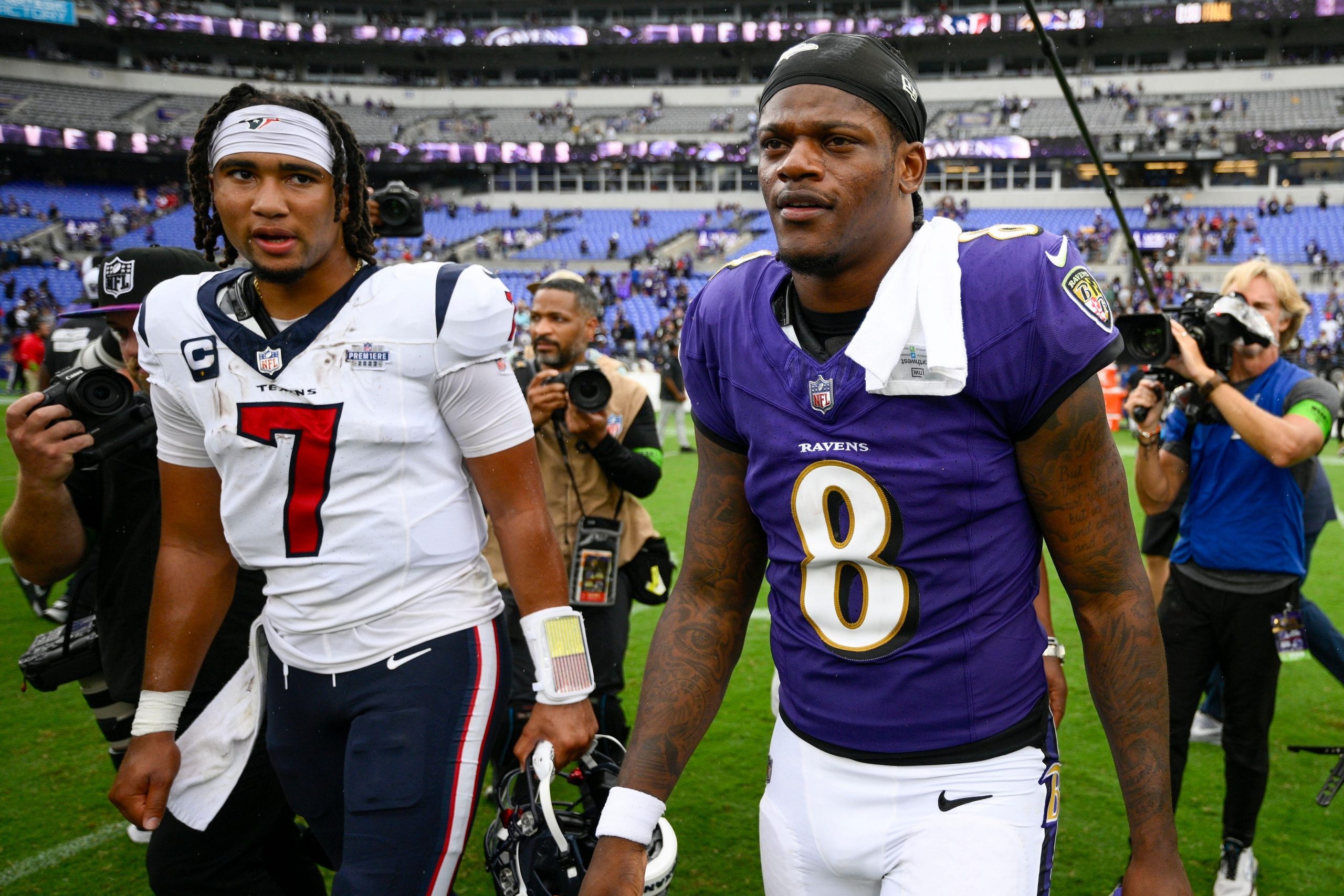
Quarterback play is often the headline when discussing Baltimore Ravens vs Texans match player stats, and for good reason. The Ravens’ quarterback typically thrives on dual-threat abilities, blending accurate passing with dangerous rushing potential. His stat line usually reflects balanced efficiency—moderate passing attempts paired with high yards per carry and smart decision-making.
On the Texans’ side, the quarterback role has increasingly become about pocket presence and timing. Player stats often show higher passing volume, with an emphasis on completions, yards after catch, and red-zone efficiency. Even when pressured, Texans quarterbacks tend to rely on quick releases and short-yardage accuracy to stay competitive.
When comparing both quarterbacks head-to-head, Ravens passers usually edge out in rushing stats and third-down conversions, while Texans quarterbacks often post respectable passing yard totals. This contrast adds depth to the Baltimore Ravens vs Texans match player stats, highlighting two very different but effective offensive approaches.
Running Back Stats and Ground Game Impact
The ground game is a major factor in nearly every Baltimore Ravens vs Texans match player stats breakdown. Baltimore is known league-wide for a run-heavy approach that features multiple backs and creative rushing designs. Ravens running backs often post strong yards-per-carry numbers, even if individual carry totals aren’t always massive.
Texans running backs, on the other hand, tend to see more traditional usage. Their stats usually reflect higher carry counts and an increased role in pass-catching situations. Screens, check-downs, and short routes inflate total yards from scrimmage, making Texans backs valuable contributors even when rushing lanes are limited.
When comparing rushing stats between both teams, the Ravens typically dominate total rushing yards, while the Texans may show more balanced individual production. This difference in rushing philosophy is one of the most telling aspects of Baltimore Ravens vs Texans match player stats and often dictates time of possession.
Wide Receiver and Tight End Player Stats Breakdown
Skill-position stats add another exciting layer to Baltimore Ravens vs Texans match player stats. Ravens receivers often focus on efficiency rather than volume. Their stat lines usually show fewer targets but higher yards per reception, reflecting a play-action-heavy offense designed to strike quickly.
Tight ends play a major role in Baltimore’s passing attack. Player stats frequently highlight tight ends leading the team in receptions or red-zone targets, creating matchup nightmares for linebackers and safeties. This usage boosts completion percentage while limiting turnover risk.
Texans wide receivers, meanwhile, tend to rack up higher target numbers. Their player stats often show consistent catches, solid yardage totals, and dependable third-down conversions. This contrast between explosive efficiency and steady volume makes receiver stats a key comparison point in any Ravens vs Texans matchup analysis.
Defensive Player Stats That Shaped the Match
Defense is where Baltimore Ravens vs Texans match player stats truly get interesting. The Ravens’ defense is historically aggressive, and individual stats often reflect high tackle counts, quarterback pressures, and forced turnovers. Linebackers and safeties typically shine, posting double-digit tackles and pass breakups.
Baltimore’s defensive front frequently leads in sacks and tackles for loss. These numbers don’t just look good on paper—they disrupt offensive rhythm and shorten drives. When Ravens defenders rack up pressure stats, it usually translates into fewer passing yards allowed.
The Texans’ defense tends to rely on discipline and zone coverage. Player stats often show solid interception totals and respectable tackle numbers, particularly from defensive backs. While they may not always dominate sack totals, Texans defenders excel at limiting big plays, which is clearly reflected in their stat sheets.
Special Teams and Hidden Player Stat Contributions
Special teams are often overlooked, but they quietly influence Baltimore Ravens vs Texans match player stats more than fans realize. Ravens kickers and punters typically post strong accuracy and field-position numbers, helping the defense start drives in favorable spots.
Return specialists also leave their mark. Ravens return stats usually show efficient yardage without unnecessary risks, while Texans returners may attempt more aggressive plays. These decisions directly affect average starting field position, which is a key but underrated stat.
Coverage units also deserve attention. Tackle stats from special teams players often reveal which side controlled momentum after kickoffs. These hidden numbers round out the full picture of Baltimore Ravens vs Texans match player stats beyond offense and defense.
Team Efficiency Stats and Overall Match Trends
Looking at overall efficiency provides valuable context to Baltimore Ravens vs Texans match player stats. Metrics such as third-down conversion rates, red-zone efficiency, and time of possession often favor Baltimore due to their controlled offensive style.
Texans efficiency stats usually highlight passing success on early downs and solid completion percentages. However, extended drives can be harder to sustain against Baltimore’s defense, which shows up in stalled-drive statistics.
Turnover margin is another major factor. Ravens player stats often show fewer interceptions and fumbles, reinforcing their reputation for disciplined football. Texans games tend to hinge on whether they can protect the ball, making turnover-related stats crucial in determining outcomes.
Final Thoughts on Baltimore Ravens vs Texans Match Player Stats
The Baltimore Ravens vs Texans match player stats tell a detailed story of contrasting styles, strategic execution, and individual brilliance. Baltimore’s stats often reflect efficiency, balance, and defensive dominance, while Houston’s numbers showcase volume, adaptability, and emerging talent.
What makes this matchup compelling is how stats evolve throughout the game. Early quarters may favor the Texans’ passing attack, while later stats often tilt toward Baltimore’s rushing control and defensive pressure. These shifts are why player stats matter beyond the final score.
In the end, analyzing Baltimore Ravens vs Texans match player stats isn’t just about numbers—it’s about understanding how those numbers shape the flow, momentum, and ultimate outcome of the game. For fans, analysts, and fantasy players alike, this matchup remains one of the most stat-rich battles in modern NFL football.