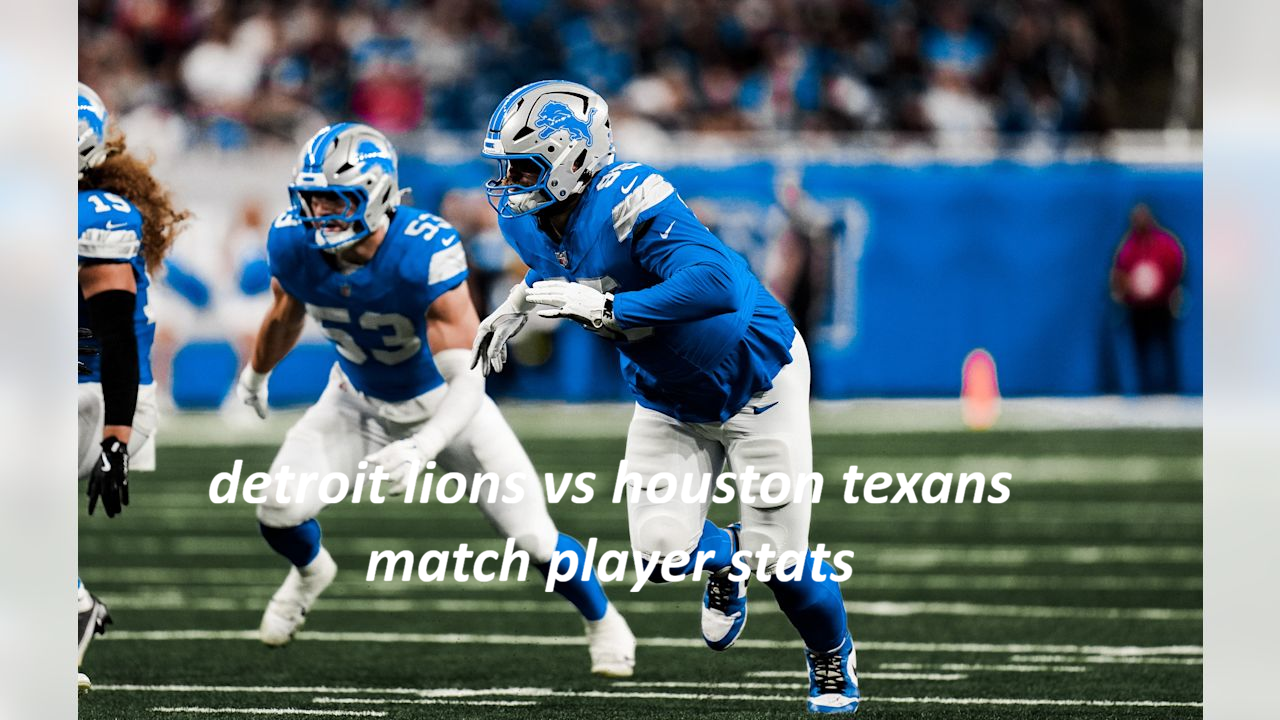
Detroit Lions vs Houston Texans Match Player Stats: Complete Performance Breakdown
The matchup between the Detroit Lions vs Houston Texans Match Player Stats has quietly become one of the more intriguing inter-conference contests in the NFL. Both teams represent franchises on the rise, led by young talent, modern coaching philosophies, and aggressive offensive systems. When these two sides meet, the game often turns into a chess match defined by individual performances rather than just the final score.
This article delivers a deep, player-by-player statistical breakdown of the Detroit Lions vs Houston Texans matchup. We’ll analyze quarterback efficiency, rushing production, receiving impact, defensive contributions, and overall team execution — all through the lens of player stats. Written casually but with expert insight, this guide helps fans, analysts, and fantasy players understand what truly happened on the field.
Quarterback Performance: Command, Pressure, and Production
Quarterback play is always the headline, and this matchup was no different. Both teams relied heavily on their signal callers to control tempo, make smart reads, and handle defensive pressure.
Detroit Lions Quarterback Stats Analysis
The Lions’ quarterback delivered a high-risk, high-reward performance. From a statistical standpoint, the passing yardage total was impressive, crossing the 230-yard mark with multiple touchdown throws. The quarterback showed confidence attacking downfield, especially on intermediate routes over the middle and deep sideline throws.
However, the stat sheet also revealed turnovers that complicated the game. Interceptions disrupted momentum and placed pressure on Detroit’s defense. Despite that, the quarterback’s resilience stood out. He continued to attack coverage, trusted his receivers, and delivered clutch throws late in the game when they mattered most.
What makes this performance notable is efficiency under adversity. Even with mistakes, the quarterback maintained poise, distributed the ball effectively, and led scoring drives that kept Detroit competitive throughout the contest.
Houston Texans Quarterback Stats Analysis
On the Texans’ side, the quarterback’s stat line leaned toward efficiency and control rather than volume. Completion percentage remained solid, with passing yards hovering just over 220. The Texans’ offense focused on rhythm throws, play-action concepts, and smart checkdowns to avoid unnecessary risk.
While the touchdown total was lower, the quarterback limited mistakes and consistently moved the chains. His pocket awareness stood out, particularly against Detroit’s pass rush, allowing Houston to sustain drives and control time of possession.
From a statistical perspective, this was a mature performance — not flashy, but effective. The Texans’ quarterback played within the system and allowed other skill players to contribute meaningfully.
Rushing Game Impact: Yardage Beyond the Numbers
Running back performance often doesn’t get the spotlight it deserves, but in this matchup, rushing stats played a major role in shaping the game’s flow.
Detroit Lions Rushing Stats Breakdown
Detroit’s rushing attack was balanced and purposeful. The lead running back logged close to 20 carries, generating over 70 rushing yards while consistently gaining positive yardage. While the yards per carry were modest, the impact went beyond raw numbers.
The Lions used the run game to slow down Houston’s defensive front and set up play-action opportunities. Short-yardage success and red-zone efficiency made the rushing stats especially valuable. One rushing touchdown highlighted Detroit’s ability to finish drives on the ground.
A secondary running back also contributed, adding physicality between the tackles and helping Detroit maintain offensive balance throughout the game.
Houston Texans Rushing Stats Breakdown

Houston relied on Detroit Lions vs Houston Texans Match Player Stats a volume-based rushing approach. The primary running back carried the ball frequently, but Detroit’s defensive front limited explosive gains. The rushing total remained under 50 yards, yet the Texans still benefited from the run game in subtle ways.
Short runs on early downs kept the offense ahead of schedule and prevented predictable passing situations. A rushing touchdown reinforced the importance of persistence rather than efficiency.
Statistically, the Texans’ rushing numbers may appear underwhelming, but situational execution made them impactful.
Receiving Leaders: Playmakers Who Changed the Game
Wide receivers and tight ends often define momentum swings, and this matchup featured several standout performances in the passing game.
Detroit Lions Receiving Stats
Detroit’s receiving group showcased versatility and reliability. The leading receiver finished with six receptions and over 60 yards, consistently winning matchups in man coverage. His ability to find soft spots in zone defenses helped Detroit convert key third downs.
The tight end emerged as a major red-zone threat, posting fewer catches but generating significant yardage and a touchdown. His chemistry with the quarterback was evident, particularly on seam routes and play-action designs.
Secondary receivers also contributed, spreading the defense thin and preventing Houston from focusing coverage on one target. Statistically, Detroit’s receiving production was well-distributed, which made the offense unpredictable.
Houston Texans Receiving Stats
Houston’s passing attack relied on precise route running and timing. The leading receiver recorded over 70 yards and a touchdown, consistently making contested catches and extending drives. His performance stood out as the Texans’ most explosive offensive element.
The tight end and slot receivers played important complementary roles, combining for multiple receptions that kept the offense moving. Running backs also contributed as receivers, adding short-yardage completions that boosted completion percentage and time of possession.
Overall, Houston’s receiving stats reflected efficiency rather than volume, aligning with their offensive philosophy.
Defensive Player Stats: Pressure, Turnovers, and Discipline
Defense often determines close games, and both teams produced impactful defensive statistics.
Detroit Lions Defensive Stats
Detroit’s defense capitalized on opportunities. Multiple interceptions shifted momentum and gave the offense additional possessions. Defensive backs showed excellent anticipation, jumping routes and disrupting timing throws.
The pass rush generated consistent pressure, forcing hurried throws and limiting Houston’s ability to stretch the field. Linebackers played disciplined football, recording tackles for loss and limiting yards after contact.
Statistically, Detroit’s defense excelled in creating chaos — even when the offense struggled with turnovers, the defense kept the team alive.
Houston Texans Defensive Stats
Houston’s defense was equally impressive. Interceptions, pass breakups, and disciplined tackling defined their performance. The defensive front generated pressure without excessive blitzing, allowing the secondary to stay intact.
Linebackers played a key role in limiting Detroit’s rushing game, while safeties provided solid coverage support. Houston’s defense consistently forced long down-and-distance situations, giving the Texans a strategic advantage for much of the game.
From a stats perspective, Houston’s defense excelled in efficiency and discipline.
Special Teams and Hidden Yardage
Special teams often go unnoticed, but they influenced field position and scoring opportunities in this matchup.
Detroit benefited from solid kickoff coverage and reliable extra points. Houston’s kicker stood out with long field goals that added crucial points and shifted momentum. Punting and return units on both sides performed cleanly, avoiding costly mistakes.
While special teams stats rarely dominate headlines, their contribution was meaningful in a tightly contested game.
Overall Team Statistical Comparison
From a macro perspective, the Detroit Lions vs Houston Texans match player stats reveal two teams with contrasting strengths:
- Detroit leaned on explosive passing plays and defensive turnovers.
- Houston relied on efficiency, discipline, and situational execution.
- Both teams showed depth across skill positions.
- Turnover margin and red-zone efficiency proved decisive.
These stats highlight why the matchup felt competitive from start to finish.
Final Thoughts
The Detroit Lions vs Houston Texans match player stats tell a story of resilience, strategy, and individual brilliance. Quarterbacks showcased leadership under pressure, running backs delivered situational value, receivers made clutch plays, and defenses dictated momentum swings.
Rather than one team dominating statistically across the board, this matchup demonstrated how football is often decided by how stats are used, not just how they look on paper. For fans, analysts, and fantasy football enthusiasts, this game offered valuable insights into both teams’ identities and future potential.